Introduction
The way people prepare their morning coffee has undergone a noticeable transformation in recent years. Where households once relied almost exclusively on large drip coffee makers that produced an entire pot at once, a growing number of consumers now gravitate toward machines built around brewing just one cup at a time. This change reflects broader shifts in how people live, work, and consume beverages throughout the day.
Several everyday frustrations have contributed to this trend. A single person living alone, for instance, often has little use for a full pot of coffee that sits on a warming plate and slowly loses its freshness. Couples or roommates may have different taste preferences, with one person wanting a bold, concentrated cup while another prefers something lighter. Compact single-serve brewing systems were developed largely in response to these situations, offering a way to prepare coffee on an individual basis without the waste, mess, or rigidity associated with traditional brewing methods.
This guide takes a closer look at the general category of single-serve pod coffee makers, examining their features, design considerations, and practical applications for everyday use.
Product Overview
At its core, a single-serve K-Cup pod coffee maker is an appliance engineered to brew one cup of coffee using a pre-measured, sealed pod rather than loose grounds. The pod system removes the guesswork from measuring coffee, eliminates the need for paper filters, and generally simplifies the entire brewing process down to inserting a pod, selecting a setting, and pressing a button.
The underlying purpose of this type of machine is convenience paired with consistency. Rather than requiring the user to weigh grounds, monitor brew time, or clean out used filters and grounds afterward, the process is intended to be nearly automatic. This makes such machines a practical fit for busy mornings, small living spaces, or environments where multiple people might want coffee prepared differently, one cup at a time.
Key Features
Multiple Brew Size Options
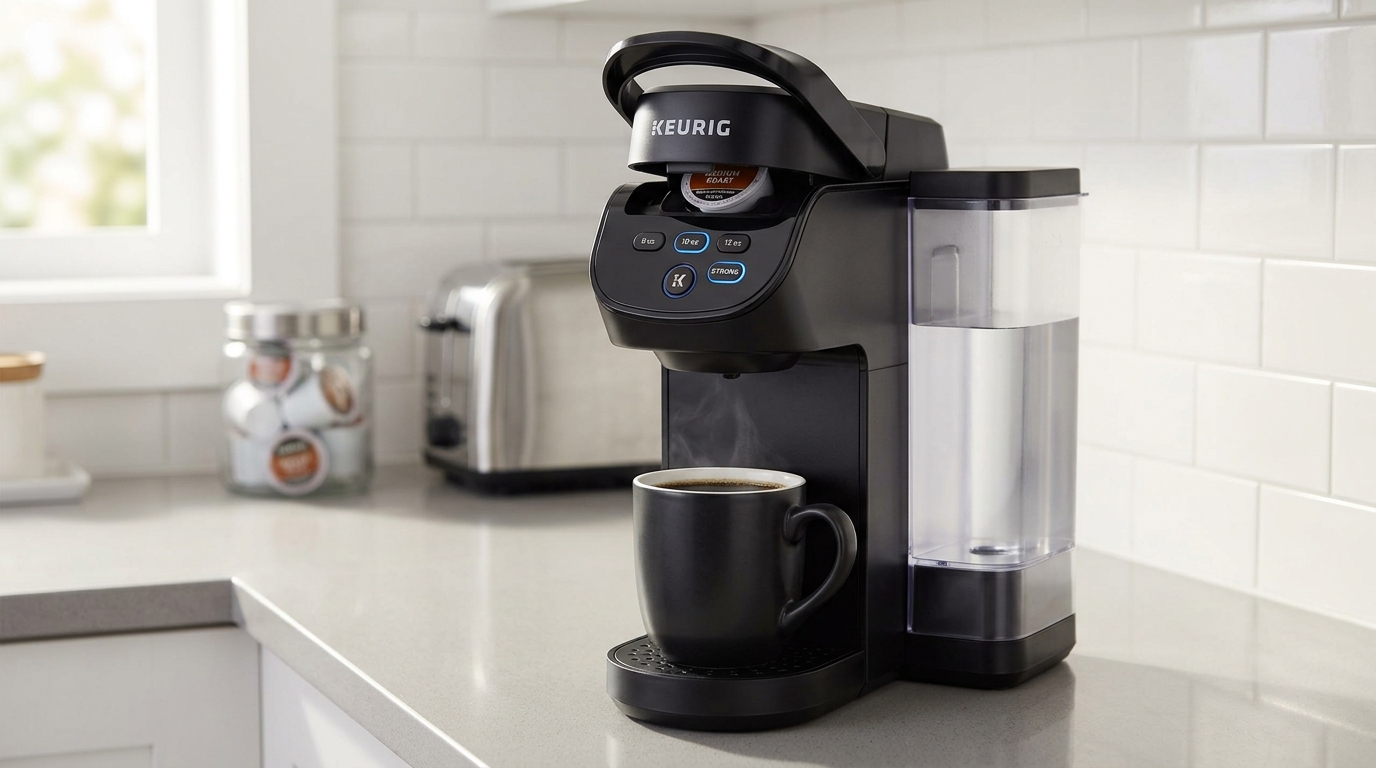
A defining characteristic of many modern single-serve machines, including this one, is the inclusion of several brew size settings. Depending on individual needs, a user might want a smaller, more concentrated cup first thing in the morning, and a larger, milder cup later in the afternoon. Having this flexibility built into a single machine can be useful for households where preferences differ from person to person or even from day to day.
This kind of adjustability is often seen as one possible advantage over machines that only offer a single fixed brew size, since it allows for a bit more personalization without needing multiple appliances.
Strong Brew Setting
Many users who are accustomed to more robust coffee sometimes find that standard K-Cup pods brew a cup that feels comparatively mild. To address this, a strong brew button is typically included, which is designed to intensify the extraction process and produce a more full-bodied cup. This setting can be particularly useful for those who transitioned from drip coffee or espresso-based drinks and are looking for something closer to that flavor profile.
It’s worth noting that the effect of a strong brew setting can vary depending on the specific pod used, as different roasts and blends respond differently to extended brewing or extraction adjustments.
Removable 42oz Water Reservoir
A reasonably sized, detachable water reservoir is another feature that many users look for when selecting a single-serve machine. A 42oz capacity is designed to reduce the frequency of refills compared to smaller tanks, which can be a meaningful convenience for households that go through several cups per day or that want to avoid interrupting their routine to refill water mid-morning.
Because the reservoir is removable, filling it at the sink rather than under a faucet positioned above the machine may also make the process more manageable, and it can simplify cleaning since the entire component can be taken out, washed, and dried separately from the rest of the unit.
Compact and Space-Conscious Design
Kitchen counter space is often limited, particularly in apartments, dorm rooms, or smaller homes. A coffee maker designed with a smaller footprint can be an important consideration for anyone trying to balance multiple appliances in a confined area. This type of design generally aims to minimize the physical presence of the machine without sacrificing core functionality.
Materials and Design
Appliances in this category are typically constructed from a combination of durable plastics for the outer housing and internal components designed to withstand repeated heating and water cycles. A black finish, as seen in this model, is a common choice across kitchen appliances broadly, largely because it tends to coordinate well with a wide range of kitchen color schemes and may help conceal minor scuffs or fingerprints over time compared to lighter finishes.
The control interface on machines like this tends to favor simplicity over complexity. Rather than offering an elaborate touchscreen or a long list of programmable options, the design generally centers on a small number of buttons, typically for brew size selection and the strength setting. This minimalist approach is intended to make the appliance approachable for users who prefer straightforward operation without a steep learning curve.
Build quality across this category can vary, and factors such as the material used for the pod chamber, the sturdiness of the reservoir latch, and the overall construction of moving parts can all influence how well a machine holds up with regular use over time.
Performance
The general performance goal of a single-serve pod machine is to heat water efficiently and push it through a sealed coffee pod within a relatively short window, typically producing a finished cup faster than a traditional drip machine would take to brew an entire pot. This is one of the primary reasons many people are drawn to this category of appliance in the first place.
That said, actual performance can be influenced by a number of variables. Water quality, for example, can affect both taste and the machine’s internal components over time, particularly in areas with hard water. The type and freshness of the coffee pod used also plays a role in the final result, as does how well the machine has been maintained. Consistent descaling and cleaning are generally necessary to preserve brewing efficiency and prevent mineral buildup from affecting heating elements or water flow.
It is worth emphasizing that individual results are not guaranteed and can differ based on these variables, along with routine use over time.
Common Uses
Single-serve coffee makers of this kind tend to fit naturally into a variety of everyday scenarios, including:
- Busy weekday mornings where speed and minimal cleanup are priorities
- Households with just one or two coffee drinkers who don’t need a full pot
- Shared office kitchens or break rooms where individual preferences vary
- Guest rooms, rental properties, or vacation homes where simple operation is valuable
- Situations where reducing the mess of loose grounds and paper filters is a priority
Because the process requires minimal setup, this type of machine can also be appealing to those who are new to brewing coffee at home and want something that doesn’t require extensive knowledge of ratios or techniques.
Advantages
There are a number of potential benefits associated with this general category of coffee maker:
- Speed and simplicity: Brewing a single cup is generally quicker and easier than preparing a full pot from scratch.
- Portion control and reduced waste: Because only one cup is brewed at a time, there is typically less unused coffee left to go to waste.
- Customization through settings: Multiple brew sizes combined with a strength option can allow for a more tailored coffee experience without needing separate machines.
- Space-saving footprint: A compact design can be particularly useful in smaller kitchens, dorms, or offices.
- Reduced cleanup: Pod-based brewing generally eliminates the need to handle loose grounds or paper filters, which can simplify daily maintenance.
Things to Consider
Despite these advantages, there are also some limitations and trade-offs worth thinking through before deciding whether this type of machine is the right fit:
- Ongoing pod costs: Over time, the cost of individual pods can add up and may be higher per cup compared to buying coffee in bulk.
- Environmental factors: Depending on the type of pods used, some consumers may have concerns about packaging waste, though recyclable or compostable pod options exist in some product lines.
- Reduced brewing control: Compared to manual methods like pour-over or French press, pod-based systems generally offer less control over variables such as grind size, water temperature, or steep time.
- Routine maintenance requirements: Regular descaling and cleaning are typically necessary to keep the machine functioning consistently, and neglecting this upkeep may affect performance over time.
Ultimately, whether this type of machine suits a particular household depends heavily on individual habits, how much coffee is consumed daily, and how much value is placed on convenience versus full control over the brewing process.
Comparison with Similar Product Categories
When compared with traditional drip coffee makers, single-serve pod machines generally prioritize convenience and speed over batch capacity. A drip machine may be more practical and cost-effective for households that consume several cups throughout the day and don’t mind brewing in advance, while a single-serve machine tends to work better for smaller households or those who want coffee prepared fresh, one cup at a time, without waste.
Compared to manual brewing methods such as pour-over, French press, or moka pots, pod-based machines typically sacrifice some degree of hands-on control and customization in exchange for significantly reduced preparation time and effort. Manual methods often appeal to those who enjoy the process of brewing itself and want more influence over variables like extraction time, while pod machines are generally geared toward those who prioritize efficiency.
Neither category is inherently superior; rather, each comes with a different balance of convenience, cost, and control, and the ideal choice tends to depend on personal lifestyle and priorities rather than any objective ranking.
Maintenance and Care
Ongoing maintenance plays a meaningful role in how reliably a single-serve coffee maker performs over its lifespan. General care practices for this category of appliance typically include the following:
- Emptying and rinsing the removable reservoir on a regular basis to prevent stagnant water or buildup
- Wiping down the exterior surfaces and drip tray periodically to avoid residue accumulation
- Descaling the internal water pathways at recommended intervals, particularly in regions with hard water
- Inspecting and clearing the pod chamber periodically to prevent blockages from leftover grounds or debris
Following the manufacturer’s suggested maintenance schedule can help extend the effective life of the machine and maintain consistent brewing results over time.
Frequently Asked Questions
1. Is this machine compatible with all K-Cup pod brands? Compatibility can vary by model, so it is generally advisable to confirm pod compatibility before purchasing to ensure a proper fit.
2. How frequently should the water reservoir be cleaned? Rinsing after each refill is generally a good habit, with a more thorough cleaning recommended on a weekly basis or as needed depending on usage frequency.
3. Does the strong brew setting significantly change the flavor? The strong brew button is designed to intensify extraction, though the degree of change can depend on the specific pod and roast being used.
4. Is descaling really necessary? Yes, periodic descaling is generally recommended for most single-serve machines to prevent mineral buildup, particularly in areas with harder water supplies.
5. What is the practical benefit of a 42oz reservoir? A larger reservoir capacity may reduce how often the machine needs to be refilled, which can be convenient for households brewing multiple cups per day.
6. Can this type of machine be used to make iced coffee? This generally depends on the specific model and its settings; some single-serve machines include features intended for cold brewing, while others are designed primarily for hot beverages.
7. Would this machine work well in a small office setting? Its compact design and single-serve functionality can make it a practical option for smaller offices, though suitability may depend on how many people will be sharing it.
8. How long does a typical brew cycle take? Brew times can vary by model and settings, but single-serve machines are generally designed to be faster than preparing a full pot with a traditional drip maker.
9. Does a removable reservoir make the machine easier to maintain? Many users find that being able to detach the reservoir simplifies both refilling and cleaning compared to fixed, non-removable tanks.
10. Are there multiple cup size settings available? Yes, this model includes multiple brew size options, which can be useful depending on the size of the mug being used or personal preference for cup volume.
11. Is this type of machine particularly noisy during operation? Noise levels can vary between brands and models, and some users may notice differences in sound depending on the internal pump mechanism used.
12. Can reusable coffee pods be used with this machine? Some single-serve machines are compatible with reusable pod inserts, though this typically depends on the specific model and manufacturer recommendations, so checking compatibility beforehand is advisable.
Final Thoughts
Single-serve pod coffee makers like this one are designed with a clear goal in mind: to simplify the process of brewing coffee while still offering a reasonable degree of flexibility through multiple brew sizes and a strength setting. The inclusion of a generously sized, removable water reservoir adds a practical convenience for those who don’t want to refill the machine after every use.
As with any kitchen appliance, choosing the right coffee maker ultimately comes down to individual circumstances, including household size, daily coffee consumption, available counter space, and personal preferences around convenience versus control. Taking these factors into account, along with realistic expectations around maintenance and ongoing pod costs, can help in making a well-informed decision.