Introduction
Personal blenders occupy a distinct corner of the small kitchen appliance world, sitting somewhere between a full-sized countertop blender and a simple hand-mixing tool. Their popularity has grown alongside broader interest in home-prepared smoothies, shakes, and quick meal prep, as more people look for a fast way to blend a single serving without pulling out a large, multi-part machine.
The problem this category is designed to solve is fairly straightforward. Full-sized blenders are often more powerful and versatile, but they also tend to be bulkier, harder to clean thoroughly, and somewhat excessive for someone who just wants to blend a single smoothie or shake. Personal blenders were developed to address this by scaling everything down — smaller vessels, simpler controls, and a more compact footprint intended for individual use.
The Nutribullet Personal Blender, model NBR-0601WM, fits within this category. This article takes an educational, non-promotional look at what this type of appliance generally offers, how it tends to be used in daily routines, and what a prospective buyer might want to consider before deciding if it suits their needs.
Product Overview
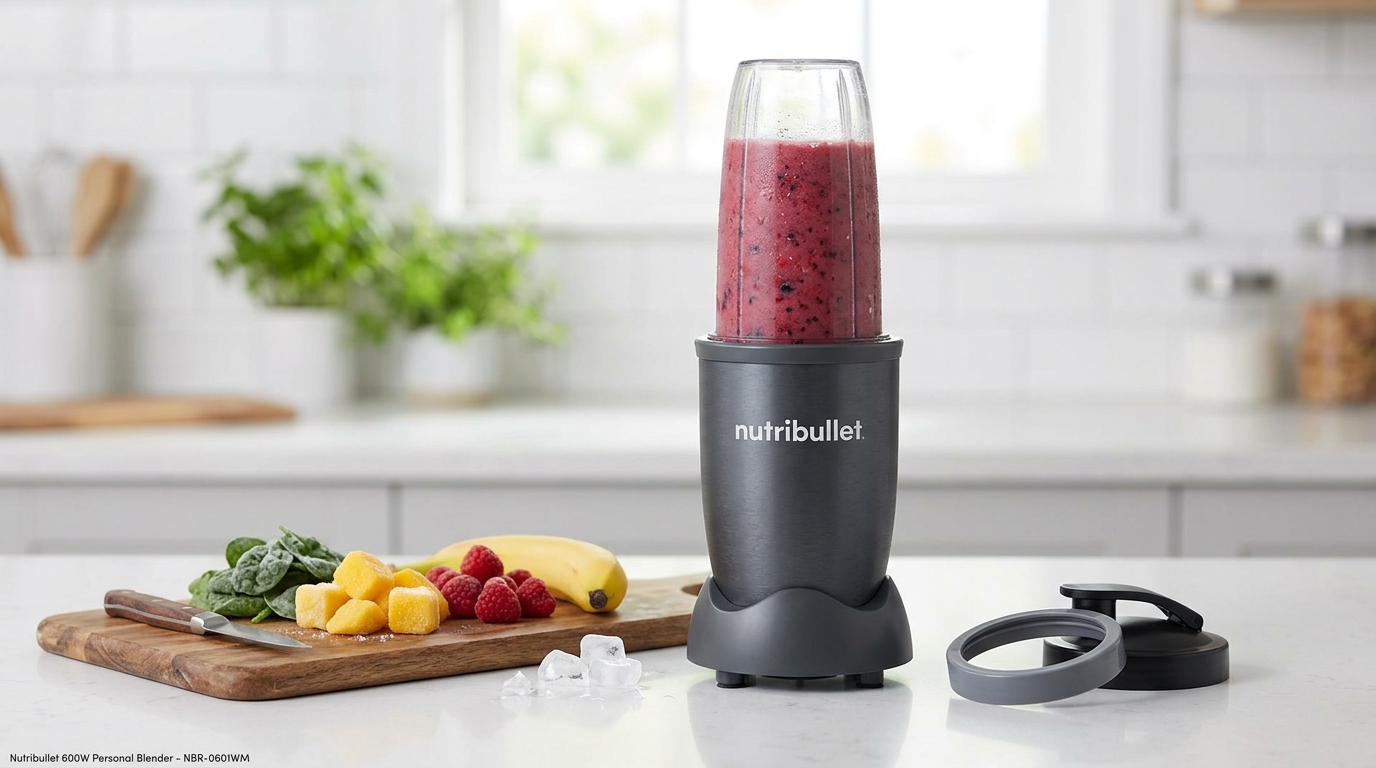
The Nutribullet Personal Blender NBR-0601WM is a compact, corded appliance built around a 24-ounce blending cup and a 600-watt motor. It’s designed primarily for single-serving tasks such as shakes, smoothies, general food prep, and blending with frozen ingredients.
Unlike cordless portable blenders, this model plugs into a standard wall outlet, which is a common design choice for personal blenders that prioritize consistent power delivery over battery-based portability. The dark gray finish reflects a fairly neutral, understated aesthetic that’s common across many personal blender lines.
At its core, this appliance is intended to serve people who want a quick, simple way to prepare a single blended drink or small batch of food, without needing the size or complexity of a full countertop blender.
Key Features
600-Watt Motor
A 600-watt motor is designed to provide enough power for common personal blending tasks, including softer fruits, liquids, and some frozen ingredients. This wattage is generally considered a mid-range figure within the personal blender category — higher than many battery-powered portable models, though lower than large countertop blenders built for heavier-duty use.
24-Ounce Blending Cup
The stated 24-ounce capacity is designed for a single, fairly generous serving. This size may be useful for someone who wants a larger single-serving smoothie or shake rather than a smaller, more concentrated portion, and it can also allow a bit of extra headroom for adding ingredients without overfilling.
Frozen Blending Capability
This model is described as suitable for frozen blending, which is designed to allow use of frozen fruit or ice as part of a smoothie or shake recipe. Frozen ingredients generally place more demand on a blender’s motor and blades than soft or liquid ingredients, so this feature suggests the unit is built with that kind of use in mind.
Food Prep Functionality
Beyond drinks, the appliance is also described as suitable for general food prep tasks. This may include tasks like blending small quantities of sauces, dips, or other soft food items, which can be a useful secondary function for someone who wants more than just a smoothie-only appliance.
Simple, Corded Design
Because this model uses a standard power cord rather than a rechargeable battery, it’s designed to deliver consistent power as long as it’s plugged in, without concerns about battery charge levels affecting performance over time. This trade-off favors consistent output over the portability offered by cordless models.
Compact Personal Footprint
The overall design is intended to be more compact than a full-sized countertop blender, making it easier to store in a cabinet or leave on a counter without taking up significant space, which may be relevant to smaller kitchens or single-person households.
Materials and Design
Based on general specifications typical of this product line, the Nutribullet Personal Blender NBR-0601WM likely combines a plastic motor base housing with a blending cup made from BPA-free plastic, which is a standard material choice across most personal blender products. The dark gray color suggests a neutral design intended to blend into most kitchen environments rather than stand out visually.
The blending cup typically twists onto a blade attachment, which then locks into the motor base — a mechanism common across this product category, designed to create a secure seal during blending. Because the same cup can often be used as a drinking vessel once the blade attachment is swapped for a lid, the overall design is intended to minimize the number of separate containers needed for a single serving.
Construction quality across personal blenders in this price and power range can vary, and prospective buyers may want to think about how the plastic components are likely to hold up with frequent use over time, particularly when blending harder ingredients like ice on a regular basis.
Performance
The Nutribullet Personal Blender NBR-0601WM is designed to handle everyday personal blending tasks such as smoothies, shakes, and small-batch food prep, including some frozen ingredients. The 600-watt motor is intended to provide sufficient torque for these tasks, though actual performance will still depend on factors such as ingredient size, liquid-to-solid ratio, and how full the blending cup is during use.
As with most personal blenders, very hard or large frozen chunks may require some pre-cutting or a bit of added liquid to blend smoothly, and results can vary depending on how ingredients are loaded before blending begins. No specific performance outcomes can be confirmed without independent testing, so buyers should treat manufacturer specifications as general guidance rather than a guarantee of results with every possible ingredient combination.
Common Uses
A personal blender like this one is typically used in situations such as:
- Preparing a morning smoothie with fruit, yogurt, or leafy greens
- Blending a protein shake before or after a workout
- Making small batches of sauces, dressings, or dips as part of general food prep
- Blending frozen fruit or ice into a cold beverage
- Preparing single-serving portions without needing to use a larger, multi-part blender
Many users look for this type of appliance specifically because it simplifies both the blending and cleanup process for smaller, individual portions, compared to a full-sized blender designed for larger batches.
Advantages
There are several general advantages commonly associated with personal blenders in this size and power range:
- Compact, space-saving design: A smaller footprint can be useful for kitchens with limited counter or storage space.
- Simplicity: Fewer parts and simpler controls compared to a full-sized blender may appeal to users who want a straightforward appliance.
- Consistent, corded power: Since it plugs into a wall outlet, performance isn’t affected by battery charge levels.
- Reasonable capacity for personal use: A 24-ounce cup is designed to accommodate a generous single serving.
- Versatility beyond drinks: Food prep functionality may extend its usefulness beyond just smoothies and shakes.
- Frozen ingredient compatibility: Built-in support for frozen blending can be useful for those who prefer cold, ice-based drinks.
These are general observations based on the product’s stated features, and individual experience may vary depending on specific use cases and expectations.
Things to Consider
There are a few points worth thinking through before deciding if this type of appliance fits a particular routine:
- Motor power compared to full-sized blenders: A 600-watt motor, while reasonable for personal use, is generally less powerful than large countertop blenders designed for continuous heavy-duty blending.
- Corded design limits portability: Unlike battery-powered portable blenders, this model needs to be near an outlet during use, which may not suit someone who wants to blend on the go.
- Single-serving capacity: A 24-ounce cup is designed for individual servings, so it may not be ideal for preparing drinks for multiple people at once.
- Ingredient preparation: Very hard or large frozen ingredients may require some pre-cutting to blend evenly, depending on the specific recipe.
- Long-term durability of plastic components: As with most personal blenders, repeated use with hard ingredients like ice may affect the blending cup or blade assembly over time.
Suitability ultimately depends on personal preferences, kitchen setup, and how someone intends to use the appliance on a regular basis.
Comparison with Similar Product Categories
Personal blenders as a category generally sit between full-sized countertop blenders and cordless portable blenders.
Compared to full-sized countertop blenders, personal blenders like this one are typically more compact and easier to clean, but they generally offer less power and a smaller overall capacity, making them better suited to individual servings rather than large batches for a household.
Compared to cordless portable blenders, corded personal blenders like this model tend to offer more consistent motor performance since they aren’t limited by battery charge, though they trade away the ability to be used away from a power outlet.
In general, this category occupies a practical middle ground: more capable than a battery-powered travel blender in terms of raw blending power, but more compact and simpler than a full kitchen countertop blender, making it a common choice for individual daily use.
Maintenance and Care
Routine maintenance can help extend the usable life of a personal blender and maintain consistent performance over time. General care considerations for this type of appliance include:
- Cleaning after each use: Rinsing the blending cup and blade attachment promptly after use can help prevent residue buildup, particularly with thicker smoothie ingredients.
- Checking the blade assembly: Periodically inspecting the blade area for wear or looseness can help maintain consistent blending performance over time.
- Seal and gasket care: Keeping any rubber seals or gaskets clean and free of residue can help maintain a proper seal between the cup and blade attachment.
- Drying components fully: Allowing the cup and lid to dry completely before storage can help reduce the chance of odor or moisture buildup.
- Following manufacturer cleaning guidance: Some components may be recommended for hand washing rather than dishwasher use, so checking the included instructions is generally the best approach for this specific model.
Following the manufacturer’s specific care recommendations is generally advisable, since exact guidance can vary depending on the materials used in this particular model.
Frequently Asked Questions
1. How much liquid or food can the blending cup hold? The cup has a stated capacity of 24 ounces, which is designed for a generous single serving.
2. Does this blender need to be plugged in to use? Yes, it’s a corded appliance that requires a standard wall outlet, unlike battery-powered portable blenders.
3. Can this blender handle frozen fruit or ice? Yes, it’s described as suitable for frozen blending, which is intended to support smoothies made with frozen ingredients.
4. What is the motor wattage on this model? It’s rated at 600 watts, which is generally considered a mid-range power level for personal blenders.
5. Can this appliance be used for more than just smoothies? Yes, it’s also described as suitable for general food prep tasks, such as blending sauces or dips in small quantities.
6. Is the blending cup also usable as a drinking cup? Personal blenders in this category are commonly designed so the same cup used for blending can be fitted with a lid for drinking, though specific compatibility should be confirmed in the product manual.
7. What color is this specific model available in? This listing is available in dark gray, offering a neutral look intended to fit a variety of kitchen styles.
8. Is this blender suitable for preparing drinks for multiple people at once? It’s generally designed for single servings, so preparing drinks for several people may require multiple blending cycles.
9. How does this compare to a full-sized countertop blender? Personal blenders like this one are typically more compact and simpler, but generally less powerful and lower in capacity than full-sized countertop models.
10. Are the parts dishwasher safe? Cleaning recommendations can vary by component, so checking the included instructions for this specific model is the best way to confirm proper care.
11. Does the blender come with multiple cup sizes? Specific included accessories can vary by retailer listing, so checking the official product details is recommended to confirm what’s included with this particular model.
12. Is pre-cutting frozen fruit necessary before blending? For very large or hard frozen chunks, some pre-cutting may help achieve a smoother blend, depending on the specific recipe and ingredient size.
Final Thoughts
The Nutribullet Personal Blender NBR-0601WM reflects a well-established approach within the personal blender category: a compact, corded appliance built around a single-serving blending cup and a mid-range motor intended for everyday tasks like smoothies, shakes, and light food prep. Its 24-ounce capacity and 600-watt motor position it as a fairly typical example of this product type.
Whether this model fits a particular kitchen will depend on individual habits, such as how often smoothies or shakes are part of a daily routine, whether portability away from an outlet matters, and how much counter or storage space is available. Someone who prioritizes simplicity and consistent power for personal servings may find this design appealing, while someone needing cordless portability or much larger batch sizes may want to weigh this against other appliance types.
This article is intended to provide a general, educational overview of the product category and its typical features rather than a definitive recommendation. Prospective buyers are encouraged to review the official product specifications directly before making a purchasing decision.